


In 2025, Armenia’s telecommunications “big three” – Ucom, Team Telecom Armenia, and Viva – not only launched new products and services, but also undertook network modernization projects.
Ucom
Large-scale deployment of 5G network
In November, Ucom announced the completion of its 5G network rollout across all cities of Armenia. Coverage is now available in 48 cities, hundreds of rural communities, along the Yerevan-Dilijan highway, and at the Bagratashen, Bavra, and Agarak border checkpoints.

Strategic partnerships
Ucom has established strategic partnerships with major suppliers, including Nokia, MediaKind, and Cerillion. In cooperation with Cerillion, the company has begun a full replacement of its billing system.
UPlay: a new era of entertainment
In April, Ucom launched the UPlay platform, combining high-quality video content with modern technologies to offer subscribers a wide selection of TV channels and multimedia content.
***
Team Telecom Armenia
Launch of 5G in Gyumri and Vanadzor
Team Telecom Armenia has launched its 5G network in Gyumri and Vanadzor. Network upgrades are also underway on interstate roads, ensuring reliable communication services even during travel.
Team’s 5G network is now available in the country’s three largest cities.
Memorandum on building AI infrastructure
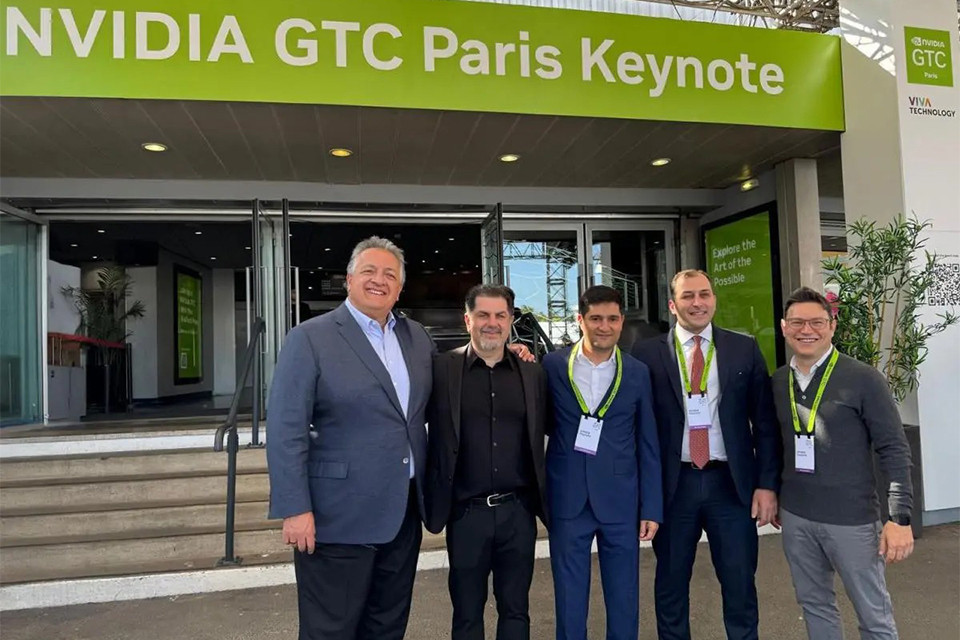
In June, Firebird, the Armenian government, NVIDIA, and Team Group announced a joint initiative to build advanced AI infrastructure in Armenia.
The project includes an investment of $500 million, the deployment of thousands of NVIDIA Blackwell GPUs, and the creation of infrastructure with a capacity exceeding 100 megawatts.

The center is scheduled to be launched in 2026.
Hayk Yesayan, co-founder of Team Group of Companies, spoke about the project in an exclusive interview with iTel.am.
2G network shutdown and the transition to modern technologies
In 2025, Team Telecom Armenia initiated a large-scale project to completely phase out its 2G network, replacing it with modern technologies (4G/5G). This is a joint initiative in the region that aims to improve communication quality and enhance digital security. The company launched a special program to replace outdated 2G phones with new 3G/4G-enabled smartphones.
Strategic partnership with Ericsson
In March, Team Telecom Armenia and Ericsson signed a memorandum of understanding on strategic cooperation, aimed at developing network infrastructure and introducing innovative solutions.
***
Viva
$150 million investment over the next three years
On July 1, Viva celebrated its 20th anniversary.

Presenting the company’s transformation, Viva shareholder Konstantin Sokolov noted that “Viva plans to invest about $150 million in the development of its 5G network and cloud infrastructure over the next three years.”
Obtaining frequencies for the 5G network
Addressing a news conference in April, Viva’s General Director Armen Avetisian said:
“Viva now has twice as much radio frequency resources as before, which is the result of the largest investment ever made in radio frequency acquisition in Viva's history: an investment of AMD 2.5 billion to obtain permission to use radio frequencies for the 5G network, which took place on this April 2."
Armen Avetisian informed that over the next 7 years, Viva plans to gradually deploy/implement the 5G network on existing and new highways, border and customs points, all cities, as well as the Academic and Engineering Cities.
He also recalled that Viva was the first company in Armenia to launch a 5G network in the centers of Yerevan and Gyumri.
Partnership with Oracle
In November, Viva announced a partnership with Oracle to open new opportunities for the business sector. The collaboration aims to provide enterprises with access to cloud solutions and business applications.
Satellite communication
In November, Viva General Director Armen Avetisyan announced that the company is preparing to deploy satellite communications.
According to Avetisyan, Viva’s network strategy is based on the principles of redundancy, technological diversity, and continuous innovation. The company has deployed a high-level, diverse fiber-optic backbone connecting European points. Its hybrid architecture, integrating terrestrial networks, a cloud platform, and NFV-based (Network Function Virtualization) solutions, is now preparing for the next stage: the deployment of satellite communications to ensure the highest level of availability for critical infrastructure.

17:29 | 24.09.25 |
Articles
Jacopo Losso on Cross-Border Investments and Why Armenia Attracts Angels
15:34 | 23.04.25 |
Articles
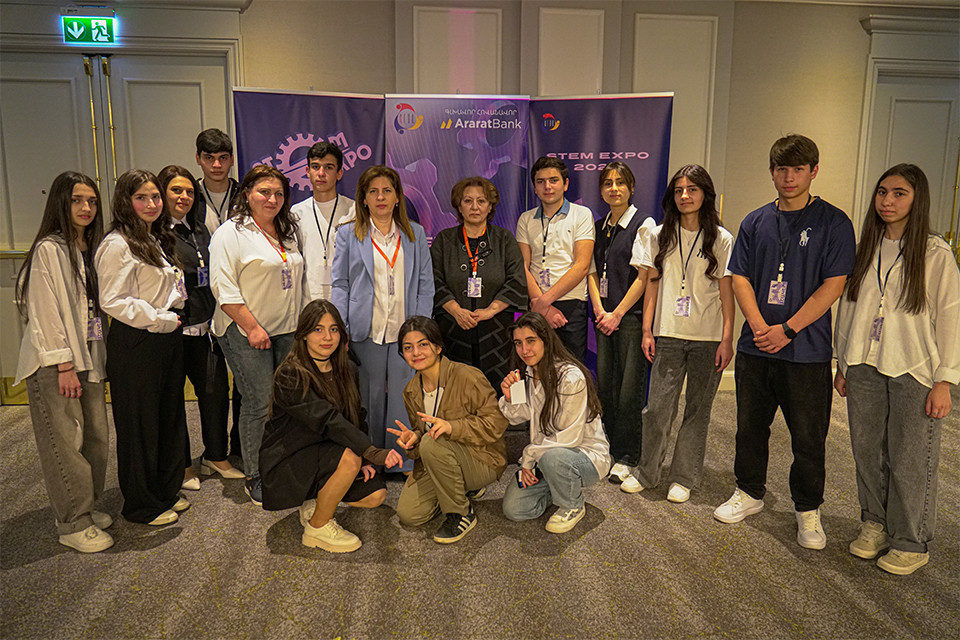
STEM Expo 2025. Cultivating Scientific Mindset from School Age
17:29 | 24.09.25 | Articles
Jacopo Losso on Cross-Border Investments and Why Armenia Attracts Angels